This article is a summary of a podcast I recorded with Dr Kwon, one of the world’s leading golf biomechanics experts.
The discussion focused on a paper he published, “Association between the On-Plane Angular Motions of the Axle-Chain System and Clubhead Speed in Skilled Male Golfers.”
The paper looked at 66 male golfers, all with a handicap of 3 or better, and an average driver speed of 110 mph.
The most important findings and our discussion is summarised below.
Listen to the full episode:
1. Club Head Speed Is Highly Correlated With Your Torso Rotation Speed
The main finding from the paper was simple. In Dr. Kwon’s words, “In simple words, the faster you rotate your body… the higher the clubhead speed is.” Peak rotation speed of the hips, torso and arms were all strongly correlated with club head speed.
What wasn’t correlated was when they peaked, or the order they peaked in. That order is the kinematic sequence. Pelvis, torso, arms, club. It’s referenced constantly in golf biomechanics, so why didn’t it show up in the data?
Dr. Kwon’s explanation comes down to time. “The average downswing time is about 250 milliseconds, so it’s one-fourth of a second. In that short time period, you have to accelerate your body and then start deceleration for further acceleration of the club.”
Faster swings have shorter downswings, which should push the peaks closer to impact. But as Dr. Kwon put it, “In the downswing, you have to reach peak angular velocity as early as possible and have enough time from the peak to impact. So that’s why… we don’t see a correlation between the timing of the peak angular velocity and the clubhead speed.”
The pelvis, thorax and shoulders are also all on the same axle. They’re rotating the body around the same axis, so there’s little benefit to sequencing between them in the downswing.
2. The Transition Is Where Sequencing Matters
Dr. Kwon defines the transition as the period from the pelvis changing direction to the club changing direction. The downswing starts when the club changes direction.
In the downswing, the pelvis, thorax and shoulders all reach their peak rotation speed within 10 to 20 milliseconds of each other. The transition can last over 100 milliseconds. That’s where there’s actually time for the pelvis to lead the torso and create a stretch in the trunk muscles before the downswing starts, and utilise the stretch shortening cycle.
He used an airplane analogy to explain force production and time. A plane with a powerful engine can take off on a short runway. A plane with a weaker engine needs a longer one. Very strong golfers can waste time in the transition and still produce speed. Most golfers can’t, and most of them do waste it. They start accelerating the body late and run out of time for the club to speed up before impact.
One indicator Dr. Kwon likes to use to assess efficiency of the swing is the ratio of wrist angular velocity to club angular velocity at impact. It shows how well a golfer uses their wrists to accelerate the club in the second half of the downswing. Elite golfers average about 65 to 66%, and some are over 70%. Golfers who put in a lot of effort but run out of time are often below 60%.
3. X-Factor Isn’t Linked To Club Head Speed
X-Factor is the separation between the torso and pelvis at the top of the backswing. X-Factor stretch is how much that separation increases in the transition.
The study looked at the X-Factor values, and at how far the pelvis and shoulders rotated on their own. The results were clear.
- X-Factor: not correlated with club head speed
- X-Factor stretch: not correlated with club head speed
- Pelvis rotation range: correlated with club head speed
- Shoulder rotation range: correlated with club head speed
In Dr. Kwon’s words, “The X Factor numbers are not correlated to clubhead speed. Period.” But “if you look at the rotation range of the pelvis and the shoulders separately, both are correlated to the clubhead speed.”
So how far you turn your hips and how far you turn your shoulders matters. The difference between them doesn’t.
The reason is that there are different ways to create separation. Suppressing the pelvis and just rotating the shoulders will increase X-Factor. But as Dr. Kwon explained, “you keep using the so-called concentric contraction, so muscles are shortening, so it doesn’t really give you the stretch shortening cycle effect.” Turning both actively, using momentum, is different. The pelvis changes direction first and the shoulders keep going. Dr. Kwon calls this the momentum strategy, and that’s the X-Factor worth having.
Restricting the hips to chase a big X-Factor is also likely to shorten your swing, leaving less time to build speed.
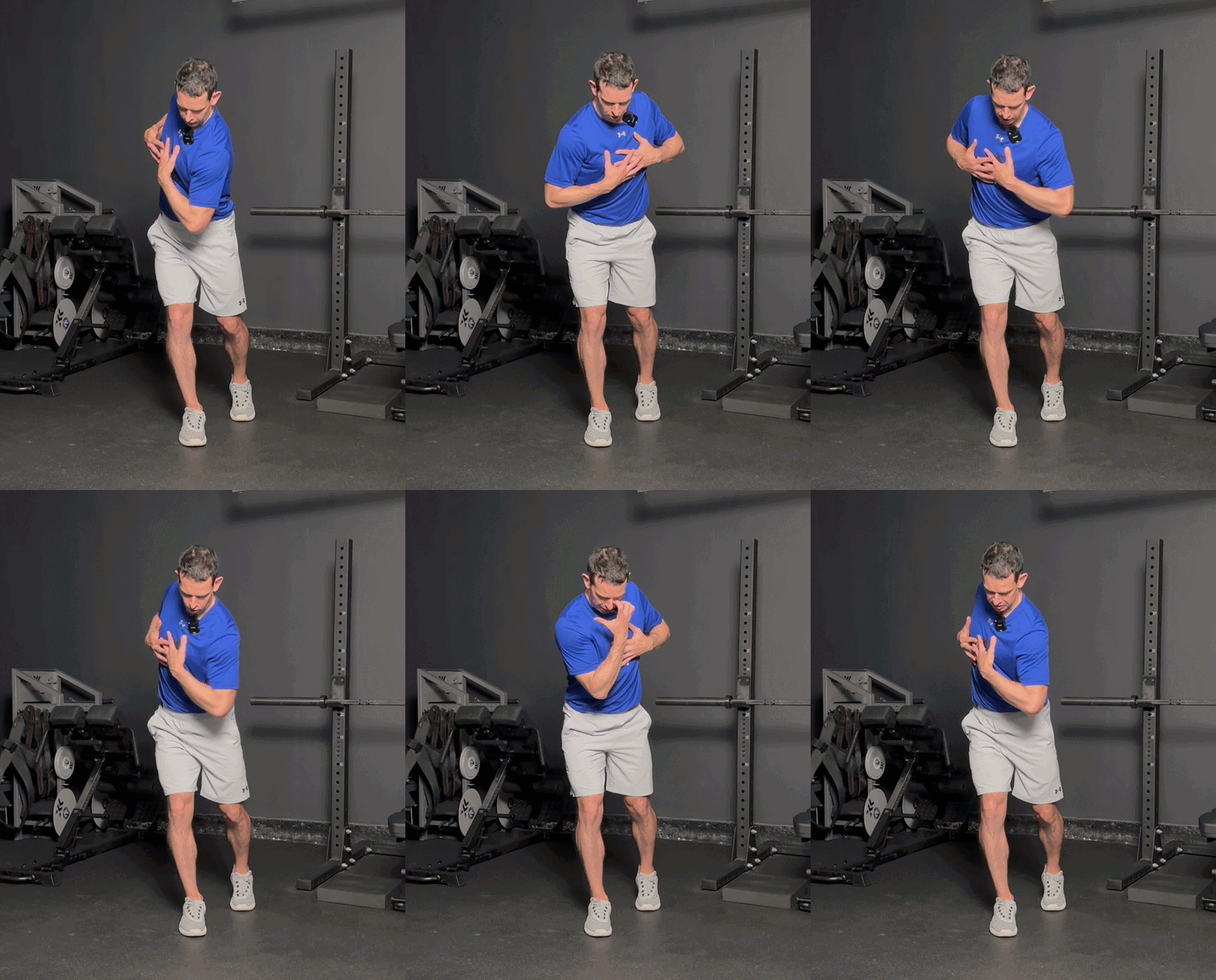
Free 10 Minute Follow Along Mobility Routine
Follow along with Mike through this free 10-minute mobility routine designed to improve range of motion between workouts.
4. Prioritize Shoulder Turn
For recreational golfers, Dr. Kwon’s priority is enough shoulder rotation, no matter what. If your body doesn’t allow much separation, turn the hips more to let the shoulders get there.
He also sees golfers turn too much when the pelvis turns flat.
The biggest difference he sees in higher handicappers is a lower body that moves but doesn’t help the upper body turn. Most of his work with weekend golfers is getting the lower body to drive the upper body turn.
5. Build The Motion Without A Ball This Winter
Dr. Kwon’s advice for golfers looking to transform their body mechanics in the swing is to stay away from the ball, and even the club, for a while. With a ball there, golfers shorten the swing and try to hit it with their arms. Build the full motion first.
The key is rhythm. Here’s what he uses:
- Continuous swings back and forth, rather than one swing at a time
- Step drills, stepping one leg at a time and turning the upper body off the rhythm
- A nylon rope, which you can’t manipulate with your wrists. If it hits under your armpit on both sides, your plane is good. Keep tension in it the whole way.
- Implements with different weights and flex. Light ones to snap, heavy ones that force you to use the whole body and wait for the right timing.
- As you develop your mechanics, you can initially hit a rubber tee. Once you can hit the tee consistently while keeping your retrained motion, add back in a ball, but watch for your swing reverting.
I love how Dr Kwon’s teaching is movement based rather than position based. No slow motion, no pausing, it’s all about using the body in a rhythmical manner.
6. Build The Pattern Before Chasing The Radar
I asked whether golfers wanting to gain 5 to 8 mph this off-season should focus on intent-based speed training with a radar. Dr. Kwon doesn’t let golfers use speed devices early on. As soon as the number is there, they muscle it and go back to old habits. His view is that speed should be “a pleasant side effect” of a better movement pattern.
He places a huge value on physical training alongside swing mechanics to maximise club head speed. He believes most golfers only reach about 70% of their potential.
7. Train Where The Swing Works Hardest
Dr. Kwon recommends functional, whole body movements with rhythm, using implements of different weights, lengths and flex.
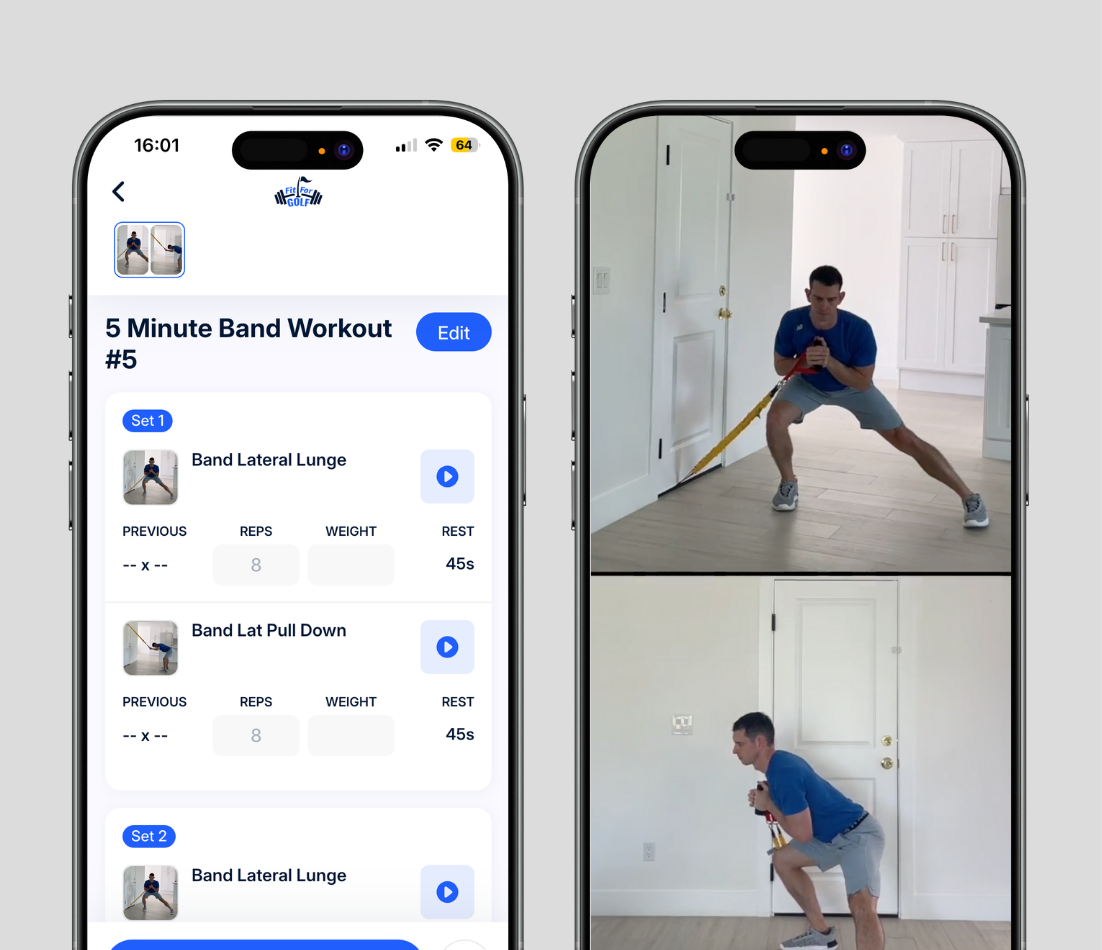
Trunk muscle torque peaks between lead arm parallel and the club being vertical in the downswing. The follow through is just deceleration. This is why the majority of the cable and band rotational exercises in the app focus on the transition phase.
He likes med ball throws with intent. Throw horizontally after a few continuous swings, then deliberately release early, late and normal. Vary stance width and tempo too. The goal is control of the movement.
My view is that a lot of golf specific gym exercises get the biomechanics wrong and end up in a gray area. Not relevant enough to the swing, and not challenging enough to create physical change. I think most golfers are better off with primarily general strength and mobility training in the gym, and using swing practice like Dr. Kwon’s to improve how they move. When these are combined, club head speed will definitely increase!
Where To Find Dr. Kwon
You can find Dr. Kwon on his YouTube channel, Dr. Kwon Golf, and at drkwongolf.info, where you can sign up for a Kwonalysis or a reprogramming session.
Listen to the full episode: