This short article is part of my Swing Speed Training Guide. That article goes into detail about everything you need to know about embarking on a successful speed training journey.
Speed training with driver or The Stack? This is a very common question. The short answer is, if possible, use both!
Speed training tools like The Stack are excellent, but you can make big progress with just a driver. There’s plenty of scope for integrating both, and this is my general recommendation. The Stack in the off season builds the raw materials, while driver and ball work coming into the season trains the specific skill and coordination. Both can stay in the weekly plan, the priority just shifts.
This type of periodised training, different training emphasises at different times, can be applied to all of your training and practice.
The Stack, with its focus on overspeed and overload training, is a great supplement for building more horsepower. View this more as “training”, and doing speed training while hitting drivers as a hybrid between training and practice, as it’s really both. Track & field throwing, which is many decades ahead of golf for the integration of technical and physical development have implemented this type of training for a very long time. They throw a variety of different weighted implements to avoid stagnation and develop slightly different physical and technical qualities.
It’s always adjusted based on strengths and weaknesses and time of season. Golfers can learn from this!
Removing the ball can be very beneficial for golfers who have a hard time committing to swinging fast. Fear of a poor shot outcome, or in the case of beginner and lower skilled golfers, a history of poor shot outcomes often leads to a golfer constraining their swing length and effort in the hope of not being embarrassed or frustrated. In the short term this is understandable and may have merit, but it essentially puts the golfer in a straight jacket, and they never develop a swing with appreciable speed. This hugely limits their long term potential.
Removing the ball and providing a singular goal of “swing this stick fast” gives them a chance to develop a swing that has some speed, without the fear of ball contact! This generally leads to a much more athletic and dynamic swing that has a lot more long term potential.
Of course over time, we need to gradually merge swing speed training and hitting the golf ball. Remember what I said about this being a skill?!
Foam balls can be a nice way to bridge this gap. You get your real driver in your hands and there is a ball to hit, but the attachment to shot outcome is greatly reduced. Driver & foam ball training into a net works nicely, and is a good practical home practice set up. I’ve done this a lot in my back garden. Foam balls are much safer in a back garden setting, and don’t make anywhere near as much noise.
Having a ball present, even its foam, and having our real driver in our hands, presents a different task for the brain and is more similar to real golf. Of course, we need to get comfortable with real balls and real shot outcomes too.
Stack → Driver air swings → Driver foam balls → Driver real balls → Driver real balls on course
This is a progression you can think of from general to specific. One isn’t necessarily better than the other, and you don’t need to include all of these. It can also be adjusted based on personal needs and preferences.
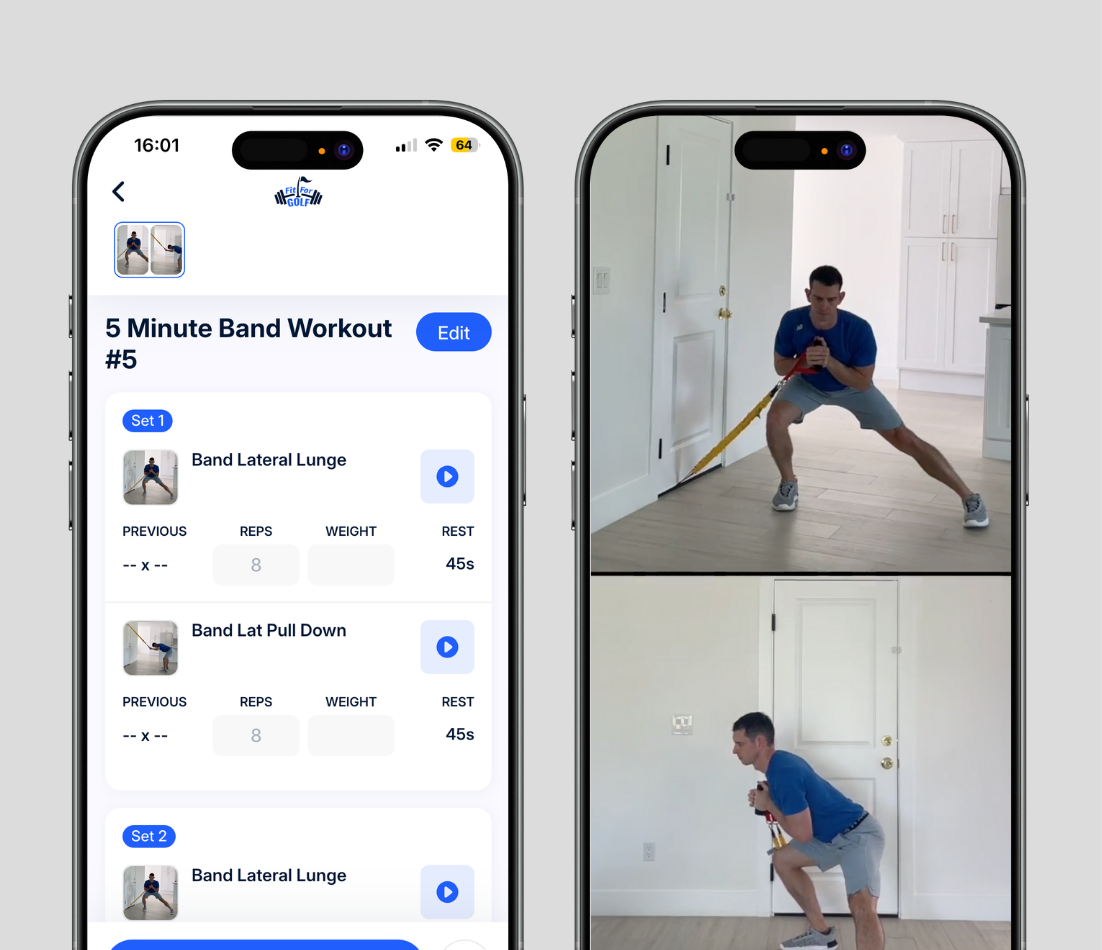
In my experience, golfers who combine The Stack and driver and ball training make the best long term progress. Of course, this should also be done in conjunction with periodised year round workout programs on the Fit For Golf App.
30 Day Free Trial
Gain 5+ mph Club Head Speed In Your First Program
Follow structured workouts. Build speed, strength, and mobility. All inside the app.
- Personalized golf fitness programs
- Golf-specific strength, mobility & speed workouts
- Home and gym options
- Warm-ups, mobility, and recovery routines
- Follow-along videos inside the app
No commitment. Cancel anytime.
Intent & Feedback – The Keys to Training For Club Head Speed
Practice what you want to get better at with a high level of intent and feedback. For speed training, a radar is essential. It is akin to having a stopwatch for measuring sprint times. Without it, you are guessing.
A radar obviously provides feedback and makes it easy to monitor your progress, but it also drives intent, a key element of any speed or power focused training. We become highly engaged in trying to beat the numbers being relayed back to us. It’s essentially a form of gamifying our training.
Speed training is a venn diagram of physical training, mechanics training, and skill building. You will be stimulating adaptations to your physiology, golf swing, and ability to coordinate impact. Contrary to some reports, most players who stick to speed training get more accurate. This is partly due to the coordination benefits provided by swinging at higher speeds than normal, and partly due to the fact that golfers tend to hit way more drivers than they usually would each week, with an ultra high level of focus.
To learn more about training for club head speed, check out Swing Speed Training – The Fit For Golf Guide.